

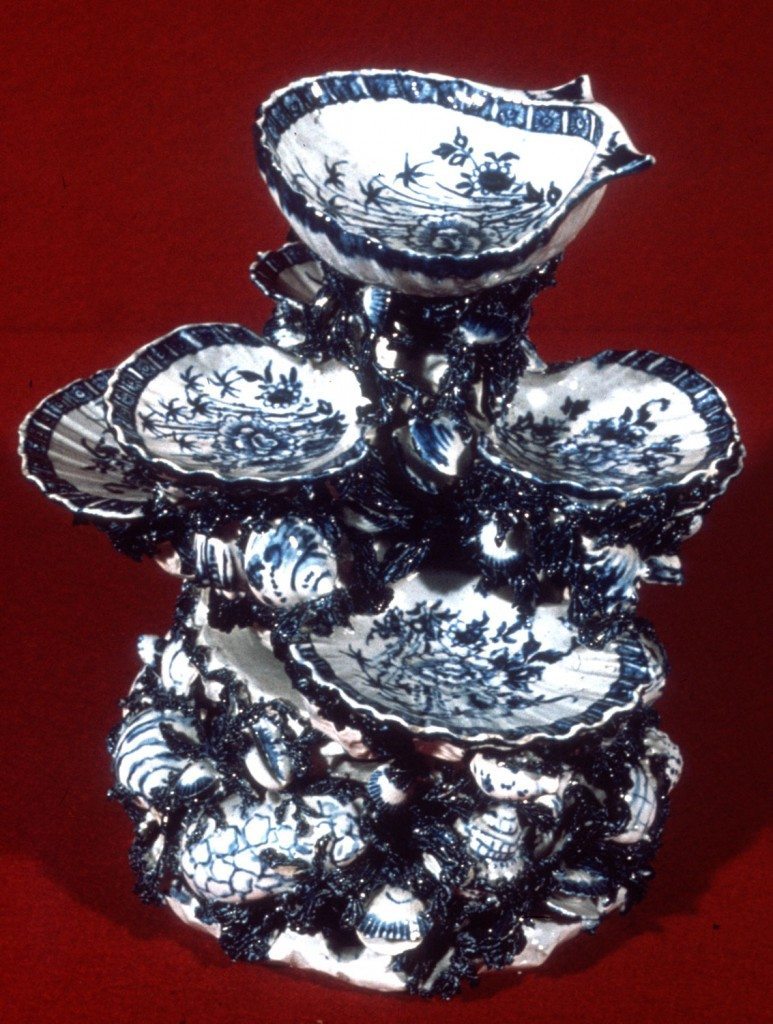
Blue & White Table Centre in two parts, c.1760
Unlike many other English porcelain factories, very little transfer printed blue & white china was produced at Derby. Transfer printing made the wares cheaper, and it was usually applied to ordinary wares for the middle-class market. But William Duesbury aimed at aristocratic clients, and preferred his artists to paint the design by hand. However, among the few Derby blue & white wares there are items of outstanding quality. The fashion for porcelain modelled as rockwork, seaweed and shells was first introduced in England in the early days of the Chelsea factory. Shapes were often taken from natural objects, and also from silverware of an ornate style.
Image from: Derby Museum and Art Gallery
« Previous in this sectionNext in this section »Continue browsing this section
 Derby Porcelain in the 18th and early 19th centuries
 Derby Porcelain: André Planche and William Duesbury
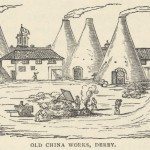 Derby Porcelain: William Duesbury II and Robert Bloor
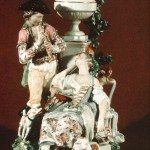 Pastoral Group, c.1770
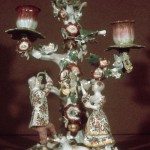 Candelabrum, c. 1755-60
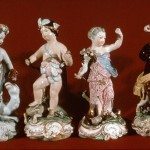 The Four Quarters (Continents), c.1775
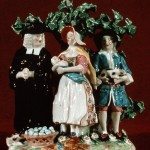 Tithe Pig Group, c.1765-70
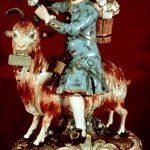 The “Welsh” Tailor, c.1770
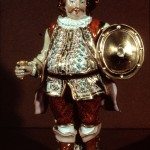 James Quin as Falstaff, c. 1825
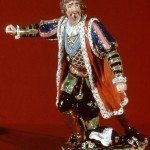 Edmund Kean as Richard III, c.1815
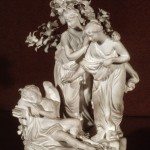 Virgins Awakening Cupid, c.1780
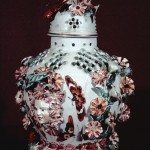 Frill Vase and Cover, c.1760
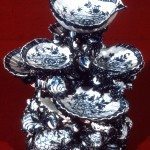 Blue & White Table Centre in two parts, c.1760
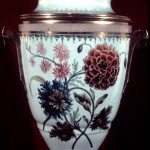 Ice Pail, c.1796-1800
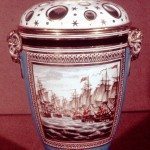 Pot-Pourri, c.1800-1810
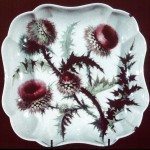 William Pegg’s Thistle Dish, c.1800
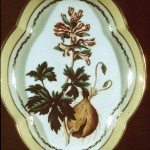 Dish, c.1800
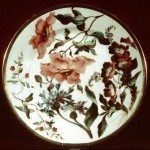 Dessert Plate, c.1813-1820
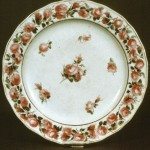 William Billingsley’s Prentice Plate, 1790-1795
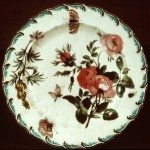 Dessert Dish, c.1790
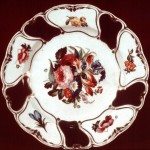 A Dessert Plate from the Trotter Service, c.1825
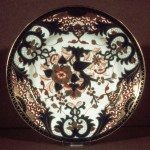 Dessert Plate (Imari)
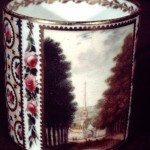 Coffee Can, c.1793-4
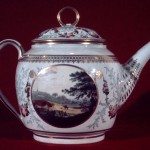 Teapot, c.1795
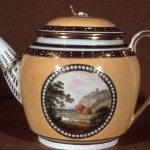 Teapot, c.1795
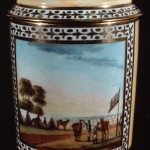 Chocolate Mug with Cover, c.1800