

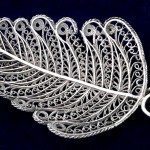
Caddy Spoon, No maker’s mark, 1797
Image from: Birmingham Assay Office.
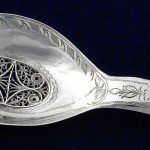
From the end of the 1770s, when tea drinking became fashionable, Birmingham toy-makers produced considerable quantities of caddy spoons, catering for the fashion of keeping spoons in tea canisters. They were never exempt from hall-marking. The Act of 1790 exempted many small articles weighing less than five penny weight, but specifically excluded caddy spoons from this concession. This delicate caddy spoon is in the shape of a leaf
« Previous in this sectionNext in this section »Continue browsing this section
 Silversmiths and Silverware in late 18th and early 19th century Birmingham
 Birmingham Silversmiths: the Taylors
 Birmingham Silversmiths: The Pembertons
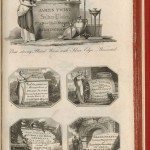 Birmingham Silversmiths: The Willmores and Linwoods
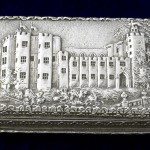 Birmingham Silversmiths: Nathaniel Mills
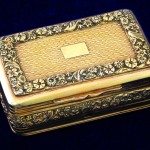 Birmingham Silversmiths: William Lea & Co
 Vinaigrette, Maker unidentified, 1817
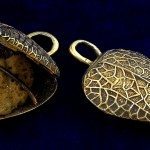 Pair of Vinaigrettes, Joseph Willmore, 1825
 Vinaigrette, Nathaniel Mills, 1835
Snuff Box, Thomas Shaw, 1825
Caddy Spoon, No maker’s mark, 1797
Vinaigrette, Nathaniel Mills, 1835
Vinaigrette, Nathaniel Mills, 1835
Snuff Box, Thomas Shaw, 1825
Caddy Spoon, No maker’s mark, 1797
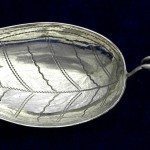 Caddy Spoon, No maker’s mark, 1797
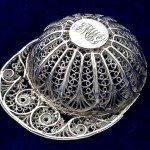 Caddy Spoon, probably Samuel Pemberton, c.1800
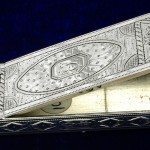 Toothpick Box, Samuel Pemberton, 1793
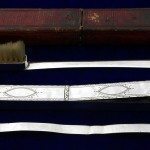 Silver Oral Hygiene items, Joseph Taylor, 1797
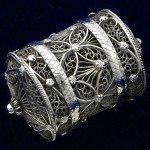 Nutmeg Grater, probably Samuel Pemberton, c.1800
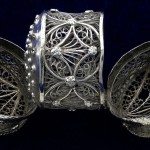 Nutmeg Grater, probably Samuel Pemberton, c.1800
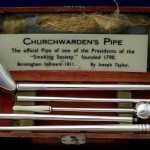 Churchwarden’s Pipe, Joseph Taylor, 1790
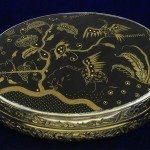 Box, Joseph Taylor, 1819
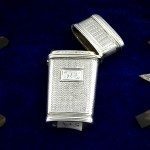 Lancet Case, Joseph Taylor, 1826
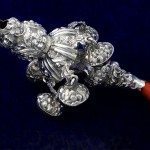 Child’s Rattle, George Unite, 1837
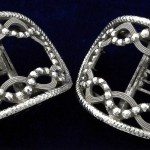 Pair of shoe buckles, Thomas Willmore, 1782
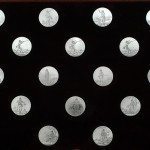 Set of Sixteen Buttons, Thomas Willmore, 1790
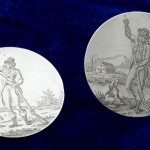 Two of a Set of Sixteen buttons, Thomas Willmore, 1790
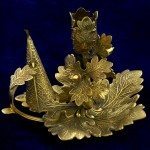 Taperstick, Joseph Willmore, 1831
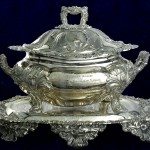 Soup Tureen, G.R.Collis & Co. 1837